

The ongoing digital transformation across various industries is driving huge demand for novel materials with advanced physical characteristics. Many industrial sectors, including automotive, aerospace, defense, medical, electronics, and energy, are increasingly adopting cutting-edge materials in their commercial applications for varied benefits. There are several reasons why the focus on advanced materials is growing. By putting forth intricate and enhanced physical properties, advanced materials can compensate for operational and manufacturing challenges unsolved by relatively less functional materials. Advanced materials also lead to better final products, thanks to their inherently improved properties. It, in turn, increases the competitive advantage of companies that adopt advanced materials.
Notably, sustainability is one of the major drivers of growth in the advanced materials industry. The large volumes of waste generated during the production and usage of materials are forcing governments to come up with more regulations, which significantly impacts companies in the construction, automotive, packaging, and manufacturing sectors. The industries are thus witnessing the advent of more sustainable materials that reduce wastage substantially. Similarly, stimuli-responsive materials, advanced composites, and 2D materials are also steering immense demand from various industries due to their leading-edge properties.
In the case of technological trends, artificial intelligence (AI) is one of the most potent ones in advanced materials design. AI is enabling engineers to make discoveries that transform material designs drastically. The technology is hastening the speed of discovery while cutting down costs. Meantime, nanotechnology is also making ground-breaking changes in the sector. While advanced materials were in existence before nanomaterials became commercialized, the recent boom in the usage of advanced materials has largely been due to the commercial production of different nanomaterials and the utilization of new nanofabrication technologies. Consequently, nanomaterials are also becoming a popular option as an additive in many industries.
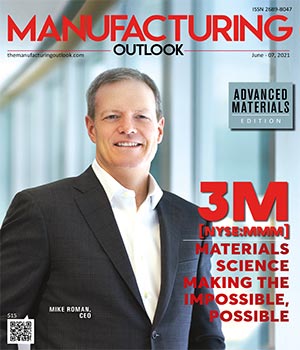
At this juncture, there is a variety of advanced materials solution providers available in the market that cater to the different needs of manufacturers. To help them choose the solution provider that best fits their requirement, Manufacturing Outlook has compiled a list of the top 10 advanced materials solution providers. The enlisted solution providers are the frontrunners in the market that provide a wide span of features. Besides, the magazine also comprises insights from thought leaders in the sector on the industry trends, best practices, recent innovations, and their advice for aspiring CXOs.
We present to you Manufacturing Outlook’s, “Top 10 Advanced Materials Solution Companies– 2021.”